
5 Books Primetime is Now has approved by Group Conscience:
Big Book of Alcoholics Anonymous
12 Steps and 12 Traditions - Alcoholics Anonymous World Services
Harry Tiebout The Collected Writings by Harry M. Tiebout
A Mind Powered Disease by Bob Anderson with Sylvie Gabriele
The Sermon on the Mount by Emmet Fox
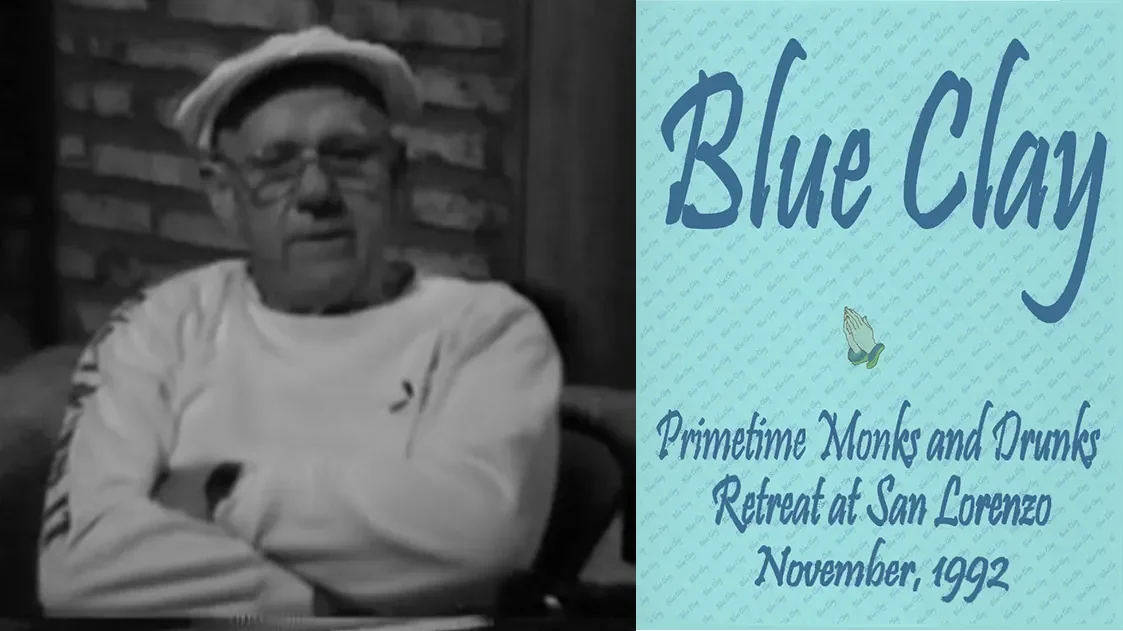
“Monks and Drunks”
Refers to a spiritual retreat experienced at the San Lorenzo Seminary, located just north of Santa Barbara, California.
On this occasion more than 50 men gather in celebration of life and living in the message of Alcoholics Anonymous.
There, in grace and serenity, the fellowship of the spirit flourishes… lingering still in the hearts of those aware that once having experienced the Monks and Drunks one never really goes all the way back home…
It is Friday night, November 13, 1992 …..
It is the opening meeting at the Monks and Drunks …..
It is the “ABCs” – the stuff of alcoholism, ego, and self …..
Bob A. is the messenger …..
Alcoholism, Ego and Self
My name is Bob A. and I am an alcoholic. Traditionally, we open with the serenity prayer:
God grant me the serenity to accept the things I cannot change, courage to change the things I can, and wisdom to know the difference.
We come here to talk about the disease of alcoholism, to identify it, and to become more aware of life, and what it’s like when the disease is functioning and showing itself.
I found out for myself a long time ago. When I first came to A.A., the words I heard in those days were words of staying sober; of not taking the first drink; and about attending meetings, getting a sponsor, getting the book; and about the things that were said to me; things that I tried my very best to do; things that I tried to do exactly as I was told to do them.
I came here because I had no place else to go. I had gone as far as I could go in the world I lived in. It was a drunken world. I came to A.A. out of an alky hospital and I tried to do what other alkies seemed to be doing, at least according to what I thought I saw them doing. So I stayed sober, but I remained the same man sober that I had been drunk. For more than two and one-half years in A.A., staying sober -not drinking. I was attending meetings, and I was listening to, and trying to do, many things. I had a sponsor that was a Step man and a God man, and from the moment I got out of the hospital he pounded Steps into me. He did my thinking for me for three and one-half months.
I went into A.A. in Cleveland, Ohio. Then I had to move out here. When I came to California my sponsor would come out here and visit me, and he would stay with me for a month or so, many times. When he was here and talking to me I didn’t have problems like I did when I was alone. But I never seemed to be able to get a handle on exactly what this program of A.A. was all about. Yet, I was sober and I was doing everything I thought possible to do.
I did Steps, and the Steps I did were the Steps I was taught to do by other human beings; my sponsor and others that I listened to at meetings. But I had no success. I wasn’t aware of what was wrong. I wasn’t aware of what brought me here. I wasn’t aware of the disease of alcoholism.
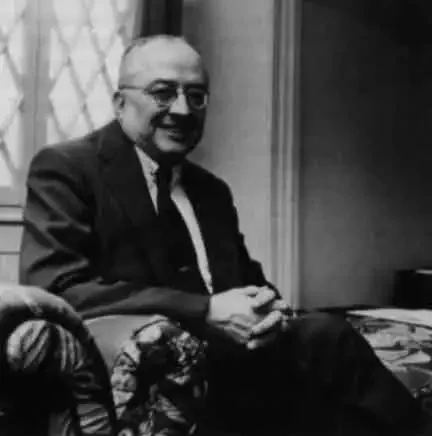
Dr. Harry M. Tiebout
Dr. Harry M. Tiebout, a psychiatrist, was an early pioneer in coupling the principles and philosophy of Alcoholics Anonymous with psychiatric knowledge of alcoholism. A strong supporter of A.A. throughout his life, he consistently worked for acceptance of his views concerning alcoholism the medical and psychiatric professions. He served on the Board of Trustees for A.A. from 1957 to 1966, and was chairman of the National Council on Alcoholism in 1950.
The 12 Steps as Ego Deflating Devices*
(Letter from Dr. Tiebout on The 12 Steps as Ego Deflating Devices )
What does Surrender Mean?
For reasons still obscure, the program and the fellowship of AA could cause a surrender which in turn would lead to a period of no drinking. It became ever more apparent that in everyone’s psyche there existed an unconquerable ego which bitterly opposed any thought of defeat. Until that ego was somehow reduced or rendered ineffective, no likelihood of surrender could be anticipated.
AA, still very much in its infancy, was celebrating a third or fourth anniversary of one of the groups. The speaker immediately preceding me told in detail of the efforts of his local group—which consisted of two men—to get him to dry up and become its third member. After several months of vain efforts on their part and repeated nose dives on his, the speaker went on to say: “Finally, I got cut down to size and have been sober ever since,” a matter of some two or three years. When my turn came to speak, I used his phrase “cut down to size” as a text around which to weave my remarks. Before long, out of the corner of my eye, I became conscious of a disconcerting stare. It was coming from the previous speaker.
It was perfectly clear: He was utterly amazed that he had said anything which made sense to a psychiatrist. The incident showed that two people, one approaching the matter clinically and the other relying on his own intuitive report of what had happened to him, both came up with exactly the same observation: the need for ego reduction. It is common knowledge that a return of the full-fledged ego can happen at any time. Years of sobriety are no insurance against its resurgence. No AA’s, regardless of their veteran status, can ever relax their guard against a reviving ego.
The function of surrender in AA is now clear. It produces that stopping by causing the individual to say, “I quit. I give up on my headstrong ways. I’ve learned my lesson.” Very often for the first time in that individual’s adult career, he has encountered the necessary discipline that halts him in his headlong pace. Actually, he is lucky to have within him the capacity to surrender. It is that which differentiates him from the wild animals. And this happens because we can surrender and truly feel, “Thy will, not mine, be done.”
Unfortunately, that ego will return unless the individual learns to accept a disciplined way of life, which means the tendency toward ego comeback is permanently checked.
This is not news to AA members. They have learned that a single surrender is not enough. Under the wise leadership of the AA “founding fathers” the need for continued endeavor to maintain that miracle has been steadily stressed. The Twelve Steps urge repeated inventories, not just one, and the Twelfth Step is in itself a routine reminder that one must work at preserving sobriety. Moreover, it is referred to as Twelfth Step work—which is exactly what it is. By that time, the miracle is for the other person.
-Dr. Harry M. Tiebout, M.D.
*Reprinted from 1953 QUARTERLY JOURNAL OF STUDIES ON ALCOHOL Vol. 14, pp. 58-68
New Brunswick, N.J. 08903
Printed in the United States of America